Video from Dysautonomia International.
Postural Orthostatic Tachycardia Syndrome
Help raise awareness for, and understanding of, this ‘invisible’ yet debilitating illness.
-
Postural Orthostatic Tachycardia Syndrome, or POTS, is a form of dysautonomia - meaning it affects the autonomic nervous system, the body’s “autopilot” responsible for regulating functions such as heart rate, blood pressure, digestion, temperature control, sweating and energy regulation.
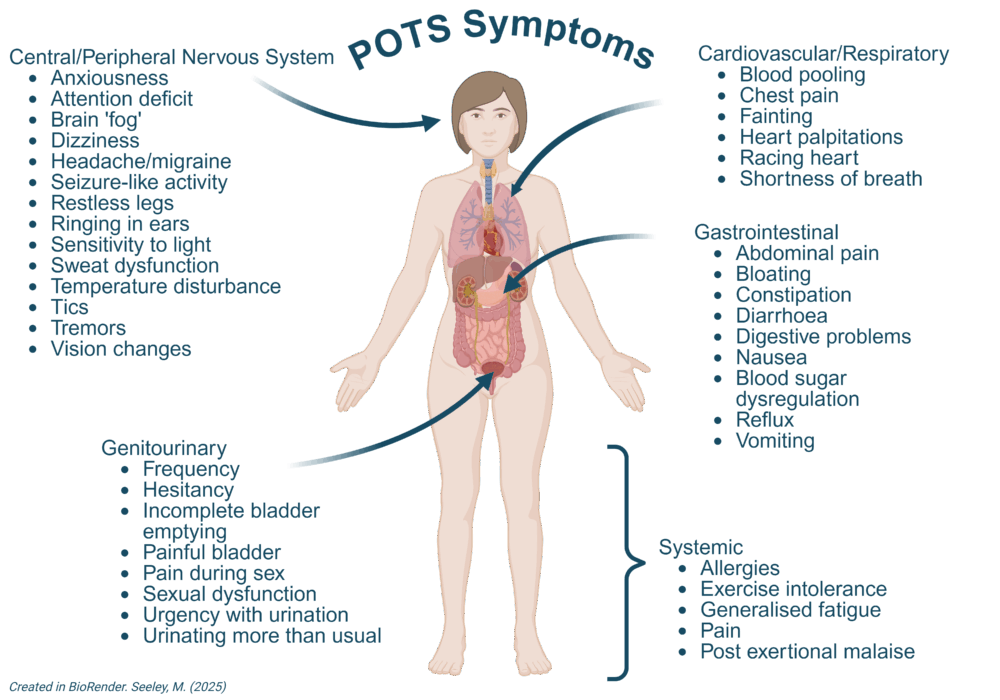
In POTS, the body has difficulty adjusting to upright posture. This can lead to a significant rise in heart rate when standing, along with symptoms such as light-headedness, palpitations, faintness, blurred vision, nausea, gastrointestinal issues, temperature dysregulation, headaches, tremors, fatigue, exercise intolerance and difficulties with focus or thinking.
POTS can have different triggers and contributing factors, and the underlying mechanisms are still being researched. For many people, it is a complex, multi-system condition that can significantly impact daily functioning.
-
POTS can affect people of any age, gender, or ethnicity, but it more frequently affects women who are childbearing age (between the ages of 15 and 50). 800,000 Australians are living with POTS.
-
Whilst POTS is not considered acutely life-threatening, it can be extremely debilitating and impact people’s daily functioning in a variety of, often invisible, ways. While dysautonomia’s like POTS can vary in severity from person to person, 80% of Australian’s living with POTS report facing moderate to extreme limitations in performing daily activities.
The functional impairment found in POTS patients has been compared by doctors with experience treating POTS to the impairment seen in individuals with congestive heart failure or chronic obstructive pulmonary disease (COPD).
According to research, people with POTS may have similar quality of life to those who are receiving dialysis for kidney failure.
Want to know from someone with lived experience?
I’m available for personal consultation related to this chronic illness via video appointment and/or email. Based on my own experience with POTS, I can talk to you about the process of getting a diagnosis, living well with a chronic illness, what to expect, and how to get help to make sure your needs are met and functionality is optimized. Fill in the form below to get in touch!
